

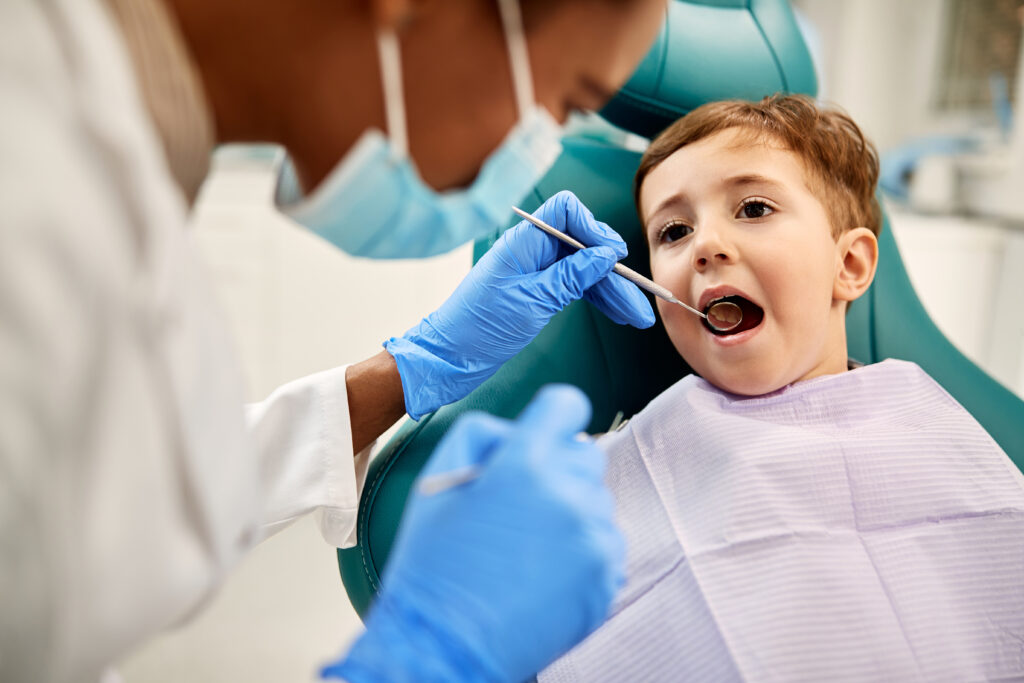
A narrow palate can be hard to judge from a quick look inside your child’s mouth. Parents may first notice crowded teeth, an unusual bite, mouth breathing, or concerns about sleep. These observations are worth discussing, but they do not tell you on their own whether the palate needs treatment.
At West U Pediatric Dentistry in Houston, Dr. Piya Gandhi looks at palate development together with how a child breathes, sleeps, eats, speaks, and uses the tongue and lips. In her FAQ interview, she explains why a measurement is a starting point for questions, rather than a treatment decision by itself.
What Do We Mean by a Narrow Palate?
The palate is the roof of the mouth. When discussing a narrow palate, the dental team is considering the width and development of the upper jaw in relation to the child’s overall findings. A palate that appears small needs context: the child’s age, development, bite, and oral function all matter.
Dr. Gandhi says the practice begins measuring palate size from a child’s first dental visit and follows development over time. That history gives families a more useful conversation than comparing their child’s mouth with a photograph online.
Narrow Palate Symptoms and Signs Parents May Notice
Possible reasons to ask about palate development include:
- Teeth that appear crowded or a bite that looks uneven.
- A palate or upper arch that appears narrow.
- Frequent mouth breathing or lips that usually rest apart.
- Snoring or sleep that seems repeatedly interrupted.
- Questions about tongue space, feeding, speech, or oral function.
These concerns can have different explanations. Some are dental findings, while others may call for an assessment by a medical or functional provider. None proves that palate width is the cause. Tell the team what you see so the findings can be considered together.
Can Two Children With the Same Palate Size Need Different Care?
Yes. Dr. Gandhi gives this example in her interview: two children of the same age may have similar measurements, but one breathes through the nose, appears to sleep well, and has no reported feeding or speech concerns. The team may monitor that child’s growth and explain what parents should watch for.
If the other child mouth breathes, snores, and has interrupted sleep, the team may recommend a deeper evaluation. Dr. Gandhi considers the child’s function alongside palate size, including possible nasal or ENT contributors and oral muscle patterns.
This distinction helps explain how she decides whether a child needs a palate expander. A narrow-looking palate does not automatically lead to expansion.
What Does an Evaluation Consider?
Parents’ observations and the clinical exam help guide next steps. Dr. Gandhi discusses breathing, sleep, tongue posture, lip closure, and jaw development as connected parts of the evaluation. The team may coordinate with an ENT, pediatrician, or another provider when the findings call for it.
The American Academy of Pediatric Dentistry recommends screening for sleep-related breathing concerns and medical referral when sleep apnea is suspected. A dental finding or screening result does not diagnose a sleep disorder. Read about our airway and sleep screening process.
Does Every Narrow Palate Need an Expander?
No. Monitoring, additional evaluation, or an individualized treatment plan may be appropriate depending on the child. If expansion is recommended, Dr. Gandhi explains that appliance design, treatment pace, and readiness are tailored to the child. Some children need sensory preparation before that step.
Tongue and oral muscle function are also considered. Learn about in-house myofunctional therapy and why airway orthodontic treatment plans differ between children.
Bring Your Questions to Your Child’s Exam
Ask how your child’s palate is developing, which findings need monitoring, and what changes to report between visits. Our airway orthodontics page explains the broader approach. Schedule your child’s exam at West U Pediatric Dentistry in Houston to discuss palate development and oral function.
Sources
- Practice-specific explanations adapted from Dr. Piya Gandhi’s FAQ interview.
- American Academy of Pediatric Dentistry: Policy on Obstructive Sleep Apnea.
- American Academy of Pediatric Dentistry: Management of the Developing Dentition and Occlusion.